We recently had an unexpected conversation at Tractor Supply after someone recognized our Scoopie Poo hoodies.
One employee told us her dog has been using the same corner of the yard, back in the trees, for years.
“I never really have to worry about it,” she said.
Another employee overheard the conversation and immediately offered a completely different approach.
“We make our daughter pick it up right after the dog goes,” he said. “That way it never becomes a problem.”
The conversation was a good reminder that dog owners tend to develop very different systems for dealing with the exact same problem.
And that’s what makes the question, “How often should you pick up dog poop from your yard?” more interesting than it sounds.
Most people aren’t really asking how often. They’re trying to figure out what level of cleanup makes sense for their yard, their dogs, and the way they actually live.
The “Pick It Up Right Away” Approach
If we’re being strictly technical, dog waste should be picked up as soon as possible after your dog goes.
That keeps the yard cleaner, prevents buildup, and means there’s never a larger cleanup waiting for you later.
Some families make this easy by removing the decision entirely. The dog goes. Someone grabs a bag. The waste gets removed. End of story.
Because nothing accumulates, there’s never a larger cleanup waiting in the future.
It’s a simple system, and for households that can stick to it consistently, it’s probably the easiest way to keep a yard clean year-round.
The challenge, of course, is consistency. Wisconsin weather isn’t always cooperative. Schedules get busy. What sounds easy in theory sometimes becomes harder in practice.
The “Nature Will Handle It” Approach
Many dog owners see dog waste as something natural.
After all, animals relieve themselves outdoors all the time. Deer, rabbits, squirrels, and countless other animals don’t have owners following behind them with waste bags.
It’s easy to assume that nature will eventually take care of it.
And to a certain extent, that’s true.
At the same time, most of us make distinctions between what happens in nature and what we’re willing to live with in our everyday spaces. A bird might poop on your car, and nobody would argue that it’s unnatural. But most people still wash it off rather than waiting for nature to handle it. Not because the bird did something wrong, but because it’s easier to deal with sooner rather than later.
Backyards often work the same way.
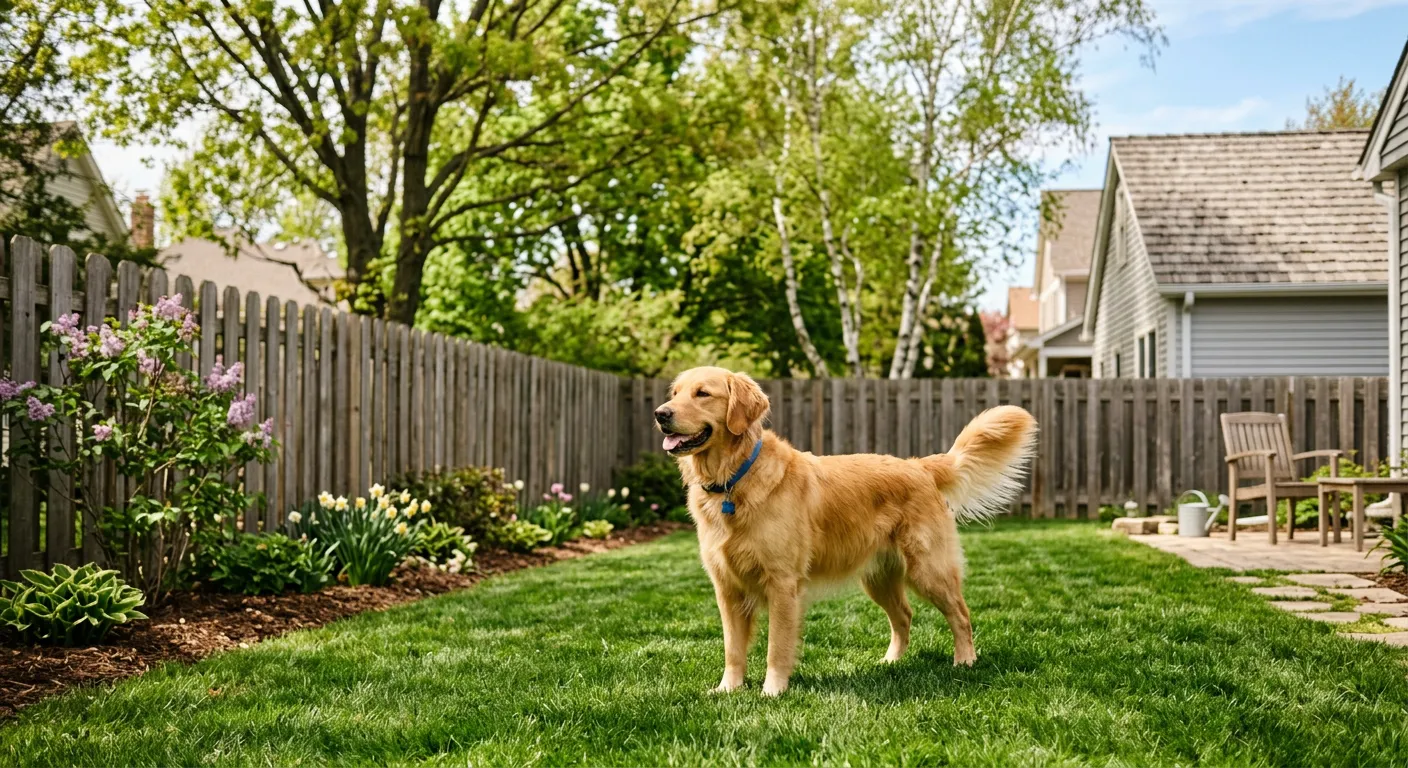
The challenge is that a backyard isn’t quite the same thing as a forest. Most dogs use the same areas repeatedly, often every day. What nature can easily absorb across hundreds of acres becomes much more noticeable when it’s concentrated in one section of a residential yard.
For homeowners with a large property and a dog that sticks to one unused corner, this approach may seem perfectly manageable. For others, especially households with multiple dogs, things can build up faster than expected.
There is also the health side of the conversation. Veterinarians and public health professionals generally recommend regular cleanup because dog waste can contain bacteria and parasites that aren’t always beneficial for you, your dog, or the environment. That’s one reason many homeowners choose not to let waste accumulate indefinitely, even if their dog tends to use the same area of the yard.
The difference often comes down to how the yard is used. A wooded corner that nobody visits is very different from the area where kids play, friends gather around a fire pit, or the family spends time outdoors.
The “I’ll Get It This Weekend” Approach
This is probably the most common system, even if it isn’t always intentional.
A pile gets left for later.
Then another one.
Then it rains.
Then the weekend gets busy.
Then a week passes.
Most dog owners don’t wake up one morning and decide they’d like their yard to become difficult to manage. It usually happens gradually. Cleanup gets postponed a few times, and before long the task feels larger than it did originally.
Winter adds its own wrinkle to the equation. When the yard is covered in snow for months, it’s easy to assume there’s nothing to worry about until spring arrives. Then the snow melts, and everything that quietly accumulated over the winter suddenly reappears all at once.
Interestingly, the problem often isn’t the amount of waste itself. It’s the feeling that the cleanup has become a project instead of a quick task.
That’s usually the moment people start looking for a better system.
The Answer Depends on Your Yard — and Your Life
After talking to dog owners, one thing becomes clear: there isn’t a single cleanup schedule that works for everyone.
A dog that uses one wooded corner of a large property creates a different situation than multiple dogs using a smaller backyard every day. A retired homeowner with plenty of time may approach the task differently than a busy family juggling work, school activities, and everything else life throws at them.
The best cleanup routine is the one that realistically fits both the yard and the people maintaining it.
For some households, that means grabbing a bag every time the dog goes outside. For others, it means setting aside time once or twice a week. And for some, it means deciding that this is one chore they’d rather hand off entirely.
There’s no prize for doing it yourself.
The goal is simply to keep the yard clean enough to enjoy and prevent cleanup from becoming one more thing sitting on an already full to-do list.
If you’d like to learn more about how dog waste cleanup services work, visit our For Homeowners page for pricing, service options, and answers to common questions from local dog owners.
Whether you handle cleanup yourself or decide to get a little help, the important thing is finding a system that works for your yard, your schedule, and your family.
Comments are closed