
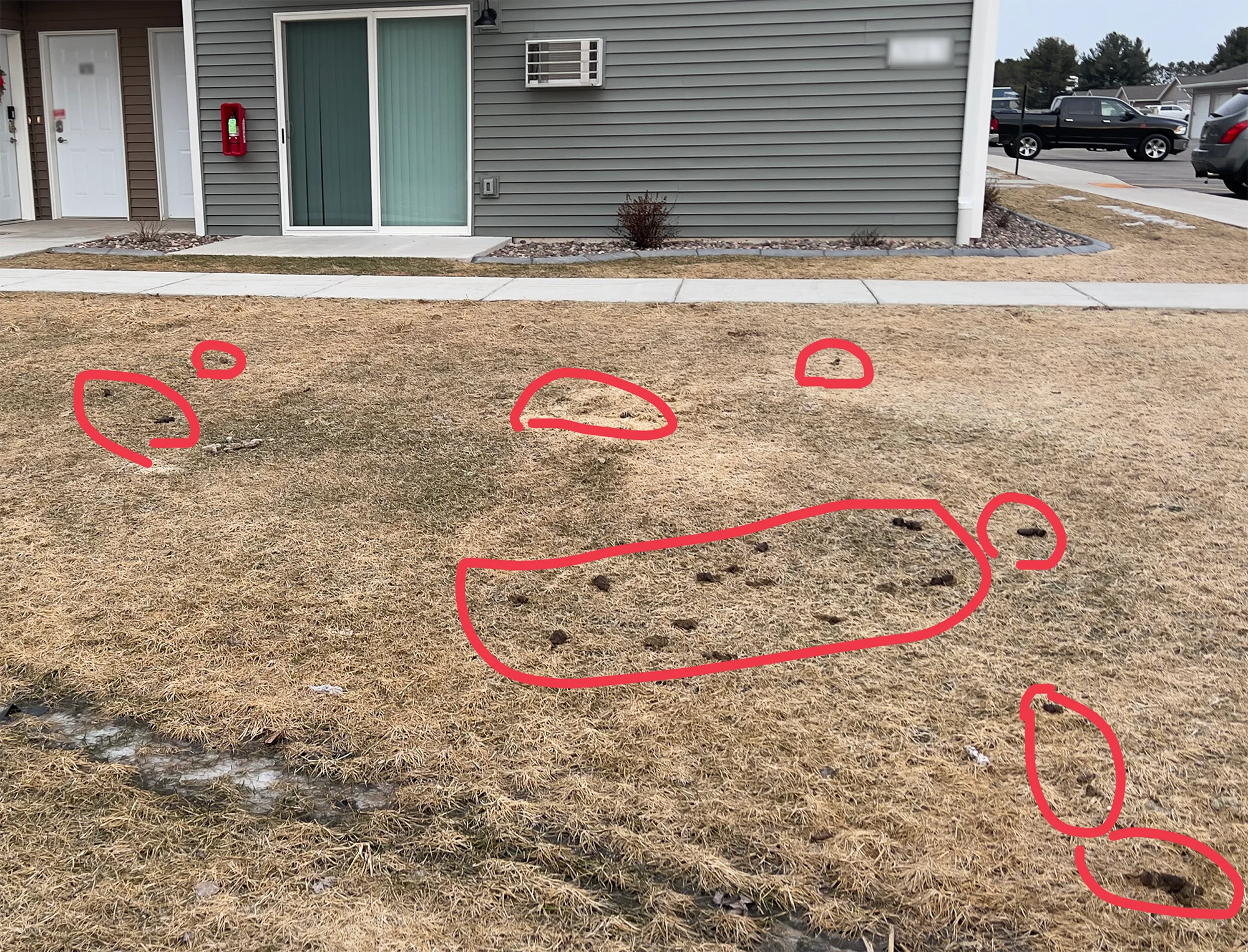
Walk through a pet-friendly apartment property, and it doesn’t usually take long to notice where dogs have been spending their time.
From a distance, things can look mostly fine. But once you start walking the property more closely — especially near individual buildings or units — those areas become a lot more noticeable. It’s often right along the path someone would take during a showing or what’s supposed to be their first impression of the property.
In some cases, it’s not even limited to the grass. It ends up in drive lanes or parking areas, where it gets tracked and spread without anyone really intending to. What starts as a few missed cleanups turns into something more visible, especially in high-traffic areas where it builds up quickly. It’s rarely one big mess — more often, it’s a series of small moments that weren’t handled, gradually adding up in the same spots until it stops being subtle and becomes hard to ignore.
This is where the question of pet waste cleanup vs DNA testing usually comes into play.
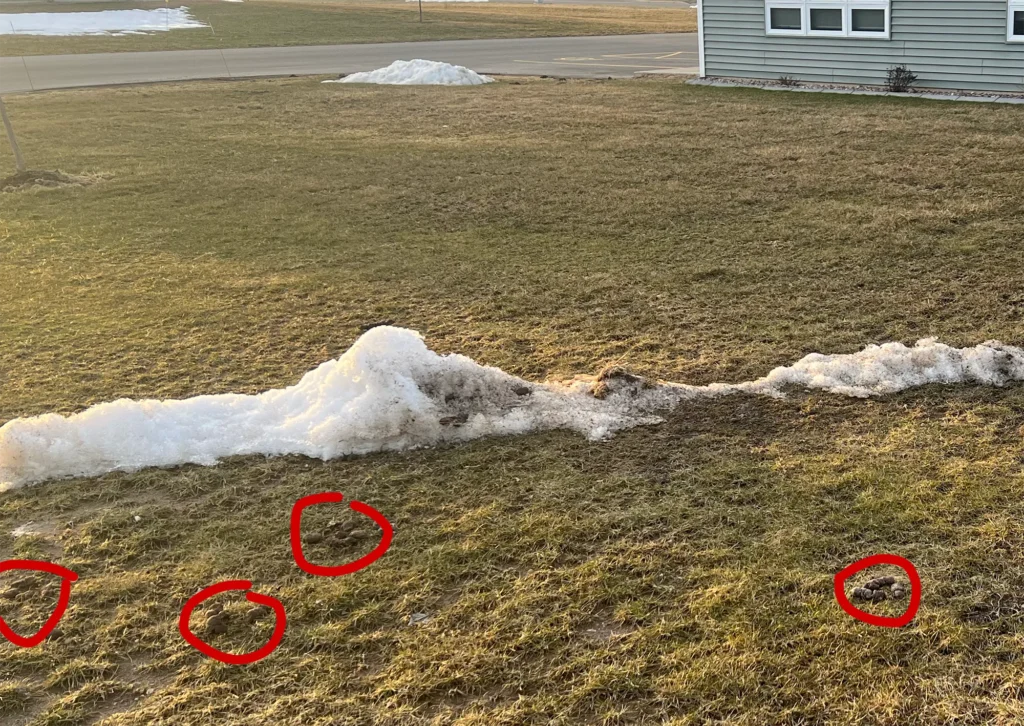
How It Gets to That Point
When that point is reached, the first reaction is usually frustration. Why aren’t people picking up after their dogs? And to be fair, every community has a few residents who simply don’t. But in most cases, it’s not that straightforward. Some people miss a spot occasionally. Others may have physical limitations that make it harder to keep up consistently, especially in communities with older residents. On their own, those situations don’t seem like much. Across an entire property, though, they add up quickly — and once the buildup is there, the reason behind it matters a lot less than the fact that it’s visible.
Where Enforcement Comes In
That’s usually when enforcement starts to come into the conversation. DNA testing programs, in particular, are often seen as a way to create accountability by identifying which dog left waste behind. On paper, that makes sense. But in practice, it introduces a different kind of system — one that depends on registration, tracking, follow-up, and consistent enforcement from staff.
It can also change the tone of the community in subtle ways. Instead of the issue being something that’s taken care of, it becomes something that’s monitored and enforced. Residents become more aware of rules, reporting, and penalties, and the situation can start to feel less like routine maintenance and more like an ongoing issue that’s being managed. And even when those systems are working as intended, they don’t address the condition of the property in the moment. The waste that’s already there still needs to be dealt with.
The Part That Gets Overlooked
That’s the part that often gets overlooked. The day-to-day problem most properties are dealing with isn’t just behavior — it’s the condition of the grounds. Once waste has built up in shared areas, it becomes a maintenance issue just as much as a policy one. And maintenance issues usually need maintenance solutions.
What Routine Cleanup Changes
Routine cleanup takes a much simpler approach. Instead of focusing on who is responsible, it focuses on keeping the property consistently clean. When that’s handled on a regular basis, the difference is immediate. The grounds look better, complaints tend to drop off, and staff aren’t pulled into the same recurring issue. Just as importantly, it removes a layer of tension between residents. People aren’t noticing what others didn’t do — they’re just experiencing a space that’s taken care of.
Where That Leaves DNA Testing
That doesn’t mean enforcement tools don’t have a place. In some communities, they can still be useful over time. But they don’t replace maintenance, especially in situations where buildup is already visible. Starting with cleanup tends to have the most immediate impact because it resets the condition of the property and makes everything else easier to manage from there.
A More Practical Starting Point
In practice, that often looks like a full cleanup to bring the property back to a clean baseline, followed by a consistent schedule to keep it that way. It’s a straightforward approach, but it solves the part of the problem residents actually experience day to day.
A Quick Side-by-Side Comparison
For a simpler breakdown, here’s how routine cleanup and DNA testing compare in practice:
Routine Cleanup vs DNA Testing
| Consideration | Routine Cleanup | DNA Testing |
|---|---|---|
| Removes existing waste | ✅ Yes | ❌ No |
| Prevents buildup | ✅ Yes | ❌ No |
| Improves appearance immediately | ✅ Yes | ❌ No |
| Reduces complaints | ✅ Yes | ⚠️ Depends on enforcement |
| Requires enforcement | ❌ No | ✅ Yes |
| Staff time required for ongoing management | Minimal | Ongoing admin oversight |
| Time to see results | Immediate | Weeks or longer |
| Typical monthly cost | ~$350–$900/property | Often similar or higher when factoring program fees, testing, and admin time |
| Setup required | None | Required |
In most cases, the difference comes down to whether the goal is to enforce behavior or to maintain the condition of the property.
Keeping Pet-Friendly Spaces Usable
Pet-friendly communities work best when shared outdoor spaces feel like an asset, not something people try to avoid. And most of the time, that comes down to consistency — not just rules, but what the property actually looks like week to week.
Scoopie Poo
Scoopie Poo provides pet waste removal and grounds cleanup for apartment communities and residential properties in the Merrill and Wausau area, with simple, reliable service that keeps outdoor spaces clean without adding extra work for property staff.
Call or text: (715) 966-9522
Email: hello@scoopiepoodogs.com
Comments are closed