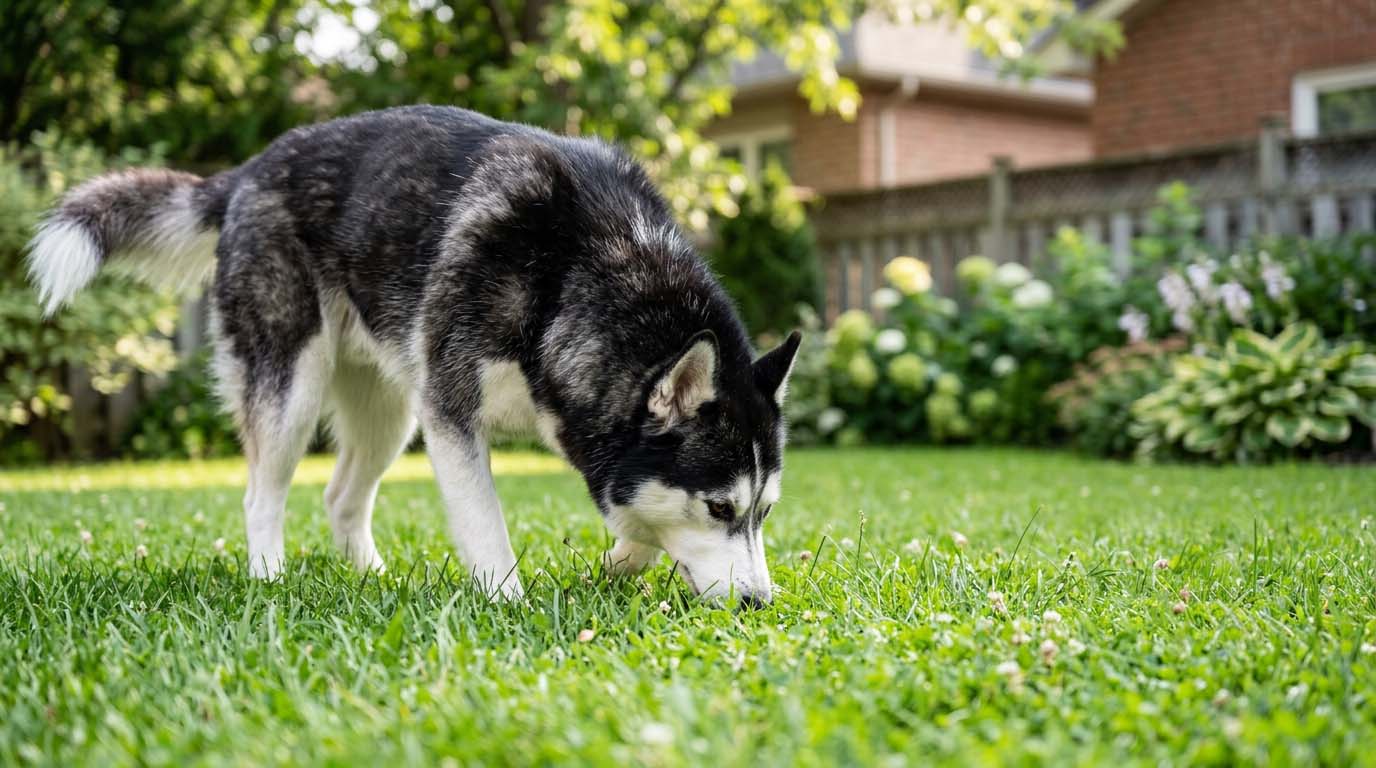
Few experiences are quite as alarming for a dog owner as realizing that your dog has just eaten something you would strongly prefer they hadn’t.
Unfortunately, many dog owners eventually discover that their dog’s definition of “edible” and their own are not always the same.
As unpleasant as it may be, eating feces—known scientifically as coprophagia—is surprisingly common in dogs. While the behavior can certainly be frustrating (and occasionally horrifying) for humans, researchers still don’t fully understand why some dogs do it.
What scientists do know is that poop eating is not always abnormal and, in some situations, may actually be a perfectly natural behavior.
What Is Coprophagia?
Coprophagia simply means the consumption of feces.
Some dogs eat their own stool. Others prefer the feces of other dogs or even other animals, such as cats, rabbits, deer, or geese.
Many dogs will never show any interest in feces at all. Others may investigate or sample it occasionally. A smaller number become enthusiastic and persistent poop eaters.
As strange as the behavior seems to us, dogs evolved under very different circumstances than humans, and understanding those evolutionary roots helps explain why coprophagia exists in the first place.
Why Mother Dogs Eat Their Puppies’ Poop
One of the clearest examples of normal coprophagia occurs in mother dogs caring for young puppies.
During the first few weeks of life, puppies are unable to eliminate on their own without stimulation from their mother. After nursing, the mother licks the puppies to encourage urination and defecation. She then commonly consumes the waste.
This behavior serves several important purposes.
First, it helps keep the den clean. Young puppies spend nearly all of their time sleeping, nursing, and developing in a confined area. Removing waste helps maintain a more sanitary environment.
Second, many researchers believe that removing feces may help reduce odors that could attract predators or other unwanted visitors to the den.
In this context, eating feces is not abnormal behavior at all—it’s an important part of caring for young puppies.
Why Some Dogs Eat Poop Even When There Are No Puppies Around
Once puppies grow and leave the den, things become less clear.
Scientists still do not fully understand why some dogs continue eating feces while others never show any interest in it.
Several explanations have been proposed.
Opportunistic Scavenging
Domestic dogs evolved alongside humans as opportunistic scavengers. Historically, dogs often survived by consuming whatever food resources were available.
From an evolutionary perspective, a dog willing to investigate unusual food sources may have had an advantage during times when food was scarce.
There May Still Be Something Worth Eating
Not all food is completely digested during its first trip through the digestive system.
Some researchers have suggested that dogs may occasionally be attracted to undigested food material that remains in feces, particularly fresh stool. However, scientists still do not fully understand why some dogs develop persistent poop-eating habits while others never do.
Interestingly, studies have found that many dogs that eat feces show a preference for stool that is less than two days old.
Dogs May Be Investigating More Than Eating
Humans tend to view feces as waste and little else. Dogs, however, gather enormous amounts of information through scent.
In addition to their remarkable sense of smell, dogs possess a sensory structure called the vomeronasal organ, or Jacobson’s organ, which is located inside of their mouth and helps them detect certain chemical signals from other animals. As a result, feces may provide dogs with information about another animal’s identity, diet, health, and reproductive status.
Not every close investigation involves swallowing. Some dogs may sniff, lick, or briefly mouth feces simply to gather information before moving on.
Learned Behavior and Individual Preference
Like many canine behaviors, coprophagia can become self-reinforcing.
If a dog repeatedly finds feces interesting or rewarding, the behavior may continue simply because the dog enjoys it.
Individual personality likely plays a role as well. Some dogs appear completely uninterested in feces, while others seem determined to sample every questionable item they encounter outdoors.
When Might It Be Worth Calling the Vet?
Although coprophagia is often behavioral and relatively common, sudden changes should always be discussed with a veterinarian.
A veterinary visit may be worthwhile if your dog:
- suddenly begins eating feces after never doing so before
- appears unusually hungry
- is losing weight
- has vomiting, diarrhea, or other digestive symptoms
- seems generally unwell
Certain medical conditions, parasites, medications, or disorders affecting nutrient absorption can sometimes contribute to changes in appetite or behavior.
What Can You Do About It?
For many owners, management is the most effective solution.
Promptly removing waste from the yard greatly reduces opportunities for dogs to practice the behavior in the first place.
Teaching a reliable “leave it” cue, supervising outdoor time, and rewarding dogs for choosing alternative behaviors can also help.
If your dog repeatedly targets the same area of the yard, creating a designated potty area may make cleanup easier and reduce temptation. You may also enjoy our article, How to Train Your Dog to Use a Designated Potty Area.
Dogs evolved under very different circumstances than humans, and some behaviors that seem strange or unpleasant to us may make perfect sense from a canine perspective.
Still, most dog owners would prefer that poop remain off the menu.
Regular yard cleanup not only keeps outdoor spaces cleaner and more enjoyable for people, but also removes temptation for dogs who can’t resist sampling yesterday’s discoveries. If keeping up with cleanup has become a challenge, Scoopie Poo is always happy to help.
Comments are closed