When people think about anything organic going back into the ground, the assumption is pretty natural:
“It’ll break down and feed the soil.”
That’s true for a lot of things—compost, leaves, manure from herbivores. But dog waste doesn’t behave the same way, and the difference comes down to what’s actually in it and how it interacts with your soil.
If you care at all about your yard, your grass, or even basic soil health, it’s worth understanding what’s really happening.
Not all “manure” is the same
The comparison people usually make is to something like cow or horse manure. Those are commonly used as soil amendments, and for good reason.
Herbivore manure is largely made up of partially digested plant material. It breaks down into organic matter that improves soil structure, adds nutrients slowly, and supports microbial life in a balanced way.
Dog waste is different.
Dogs are omnivores with a protein-heavy diet. Their waste contains:
- higher levels of nitrogen in a concentrated form
- significantly different bacterial content
- fewer beneficial organic components that contribute to soil structure
Instead of acting like a slow-release fertilizer, it behaves more like a concentrated waste deposit sitting on top of the soil.
What happens when it’s left on the lawn
In a managed compost system, organic material breaks down under controlled conditions—heat, moisture, oxygen, and microbial activity all working together.
In a typical yard, none of that is controlled.
When dog waste is left on grass:
- Decomposition is slow and incomplete
Especially in colder climates like Wisconsin, breakdown essentially stops for months during winter. When spring comes, you’re not starting fresh—you’re catching up on everything that accumulated. - Nitrogen concentration can damage grass
High nitrogen in small, concentrated spots can lead to:- yellow or burned patches
- uneven growth
- stressed turf
- Surface buildup changes the soil environment
Instead of integrating into the soil, it often sits on top, compresses, and layers over time. That limits airflow and can affect how water reaches the root zone.
The bacteria side of the equation
This is the part most people don’t think about.
Dog waste carries bacteria and microorganisms that are very different from those found in composted plant material or herbivore manure. Without proper composting conditions (which most backyards do not provide), those microbes don’t break down cleanly.
Instead, they persist in the environment.
That matters because:
- it’s not contributing to healthy soil biology
- it creates an imbalance rather than improving microbial diversity
- it’s not something you’d intentionally add to a garden bed or lawn
This is one of the main reasons dog waste is classified differently than traditional compostable material.
Why it doesn’t “just disappear”
Over time, dog waste doesn’t vanish—it changes form.
It can:
- dry out and flatten
- break apart and spread
- get pushed into the soil surface without fully decomposing
- accumulate in layers with newer waste on top
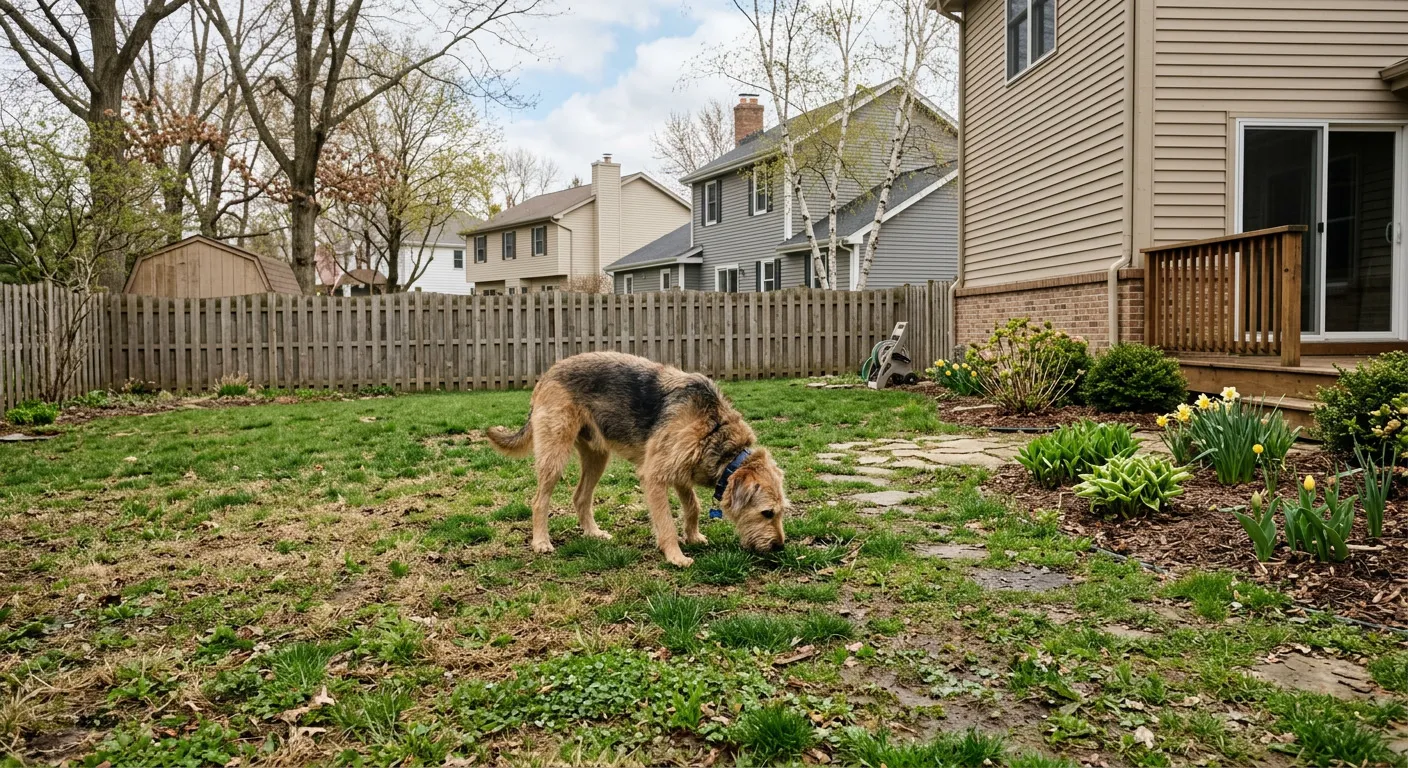
That’s why a yard that hasn’t been consistently maintained starts to feel different underfoot. It’s not just visual—it’s a physical buildup.
What this means for your yard long-term
If it’s left unmanaged, you’ll usually see:
- patchy or inconsistent grass growth
- areas that stay thin or stressed
- lingering odor as temperatures rise
- a yard that’s less usable overall
Not because of one missed cleanup—but because of gradual accumulation over time.
The practical takeaway
There’s nothing complicated about the solution, but it does need to be consistent.
- Removing waste regularly prevents buildup
- It protects the grass from concentrated nitrogen damage
- It keeps the soil environment more stable
- It keeps your yard usable and clean
Once it’s under control, it stays manageable. It’s the accumulation that creates the problem—not a single missed day.
A note for homeowners and property managers
If you’re managing a property—whether it’s your own yard or a rental—this is one of those small maintenance things that has a bigger impact than people expect.
It affects:
- how the yard looks
- how it smells
- how usable it is
- and how it’s perceived overall
Once you understand what’s happening, it really just comes down to keeping it from building up again.
Where we come in
This is exactly what we handle.
We take care of the cleanup and keep it consistent so it never builds up in the first place. Nothing complicated—just one less thing for you to think about.
👉 For homeowners:
You can get set up for regular service here: For Homeowners
If you’re managing a property or multiple units, the same issue shows up—just at a different scale.
👉 For property managers:
We’re putting together a dedicated setup for multi-unit properties. If that’s you, you can reach out here and we’ll walk through what makes sense:
Comments are closed